

News Summary :
A recent article from E! News highlights growing concerns about over-exfoliation and damage to the skin barrier. According to Deborah Kilgore, Global Director of Skin Care Knowledge at Paula’s Choice, many consumers may unknowingly compromise their skin barrier by combining multiple exfoliating acids, strong acne treatments, and retinoids within the same routine.
The article notes that common signs of over-exfoliation include dryness, redness, irritation, stinging, sensitivity, sudden breakouts, and rough skin texture. Experts recommend simplifying skincare routines, reducing active ingredients when necessary, focusing on hydration, supporting the skin barrier, and maintaining daily sunscreen use.
Source :
NBMakeup Analysis :
1 . What This Means
This story reflects a broader shift in how skincare health is being viewed.
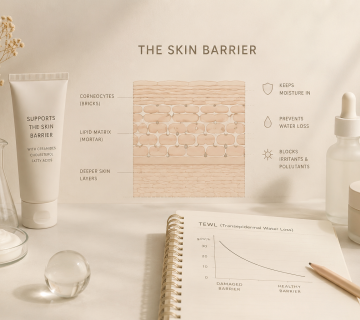
At the center of this conversation is the skin barrier—the outermost protective layer of the skin. Its job is to help retain moisture, reduce water loss, and protect the skin from environmental stressors, irritants, and harmful microorganisms.
When the skin barrier is functioning properly, skin tends to be more resilient, comfortable, and better able to recover from everyday stress. When it becomes compromised, the skin may become dry, irritated, sensitive, and more prone to inflammation.
For years, much of skincare focused on correcting visible concerns through exfoliation, resurfacing, and intensive treatments. Increasingly, however, experts are emphasizing that healthy skin is not only about treating problems but also about maintaining the systems that keep the skin functioning well over time.
This perspective aligns closely with the growing concept of skin longevity, which focuses on supporting the skin’s long-term health rather than seeking only immediate cosmetic results.
2. What Is Interesting :
One of the most interesting aspects of this story is the changing philosophy behind skincare.
Historically, many consumers associated better skincare with stronger treatments, more active ingredients, and faster visible results. Today, a growing number of experts are emphasizing that aggressive approaches may not always support long-term skin health.
The idea is not that exfoliation or active ingredients are harmful. Rather, it is that skin health often depends on balance. A treatment that delivers short-term improvement may not always support the skin’s resilience if overused.
This reflects a broader movement toward maintaining skin health gradually over time instead of constantly pushing the skin toward more intensive interventions.
3. What Remains Uncertain
Several important questions remain open:
- Can consumers realistically balance active treatments with skin barrier preservation in everyday routines?
- Will brands simplify skincare routines, or will they continue adding new products under the banner of barrier support?
- How can consumers distinguish evidence-based barrier care from marketing-driven claims?
NBMakeup Verdict :
This story is not simply about exfoliation. It reflects a broader shift in skincare philosophy—from focusing primarily on correction toward preserving the skin’s long-term function and resilience.
While many questions remain about how skin longevity will evolve in practice, the growing emphasis on skin barrier health suggests that maintaining healthy skin may be becoming just as important as treating visible skin concerns.


No comment