
News Summary
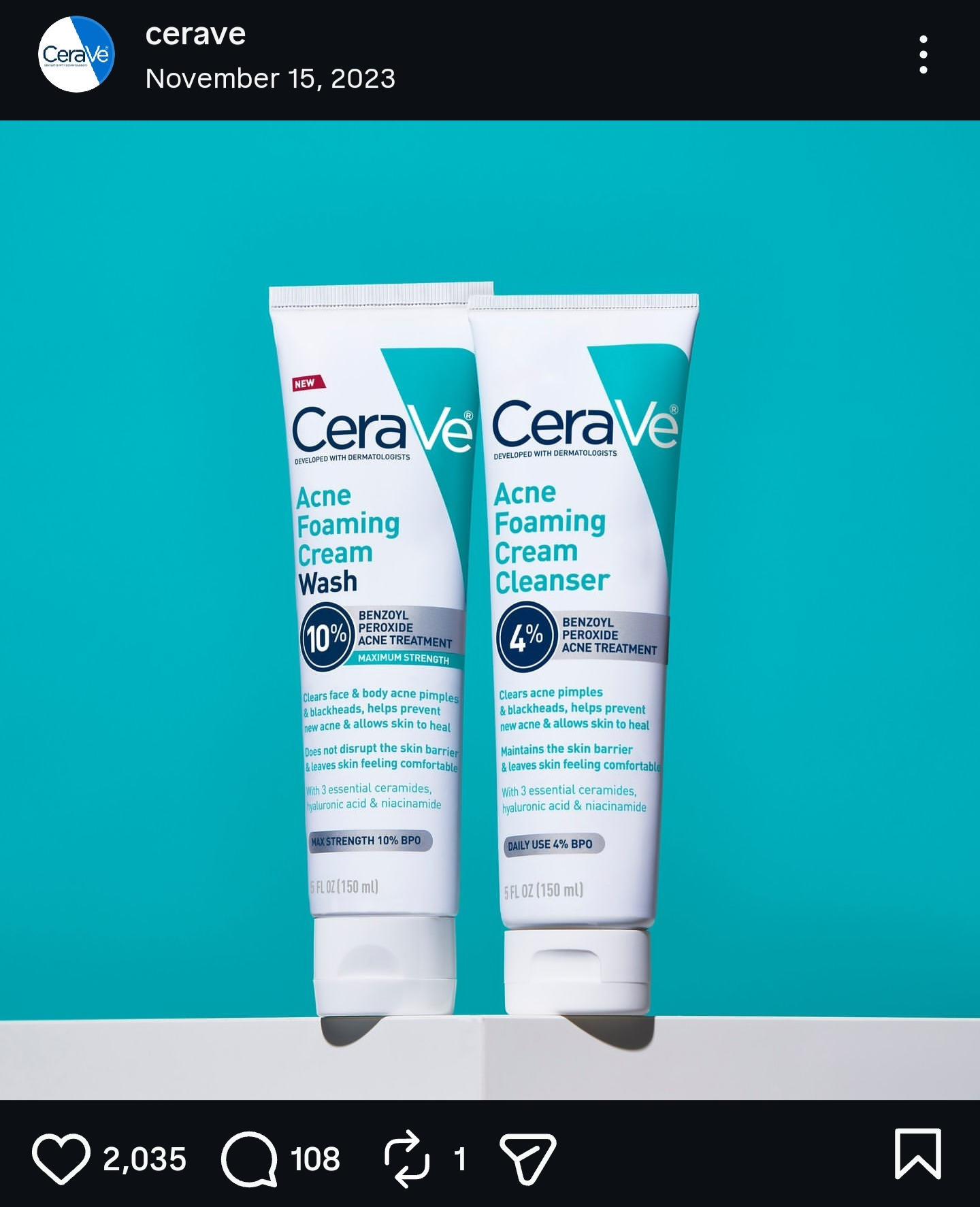
Recent headlines have reported that CeraVe and its parent company, L’Oréal, are facing multiple lawsuits related to certain acne products containing Benzoyl Peroxide (BPO). The lawsuits focus primarily on two acne cleansers and allege that Benzoyl Peroxide may degrade into benzene under certain conditions, potentially exposing consumers to a known carcinogen. However, these allegations have not been proven in court, and the litigation remains ongoing.
Importantly, the lawsuits do not involve CeraVe’s broader skincare range, such as moisturizers or hydrating cleansers. They are limited to specific Benzoyl Peroxide acne treatments.
In 2025, the U.S. FDA independently tested 95 Benzoyl Peroxide acne products. The agency reported that more than 90% showed undetectable or extremely low benzene levels and stated that the overall risk to consumers appeared very low. Some products from various companies were voluntarily recalled, but the CeraVe products named in these lawsuits were not included among those consumer recalls.
Source : gazettengr.com
NBMakeup Analysis
1. What This Means
This story is not primarily about CeraVe.
It is about a broader scientific and regulatory question:
How stable are Benzoyl Peroxide formulations during storage, transportation, and long-term use?
Benzoyl Peroxide has been one of the most widely used acne-treatment ingredients for decades and remains recommended by dermatologists worldwide. The current debate centers on whether some formulations may generate benzene under certain conditions, particularly elevated temperatures and prolonged storage.
2. What Is Interesting
One important distinction is often lost in social media discussions:
Benzoyl Peroxide and Benzene are not the same substance.
- Benzoyl Peroxide is an acne-fighting active ingredient.
- Benzene is a separate chemical classified as a carcinogen.
The lawsuits do not claim that benzene was intentionally added to products. Rather, they focus on whether Benzoyl Peroxide may degrade and generate benzene under specific circumstances.
Another interesting aspect is that concerns around Benzoyl Peroxide are not limited to a single brand. Similar discussions, testing programs, recalls, and legal actions have involved multiple acne-treatment brands over the past few years.
3. What Remains Unclear
Several important questions remain unresolved:
- Under real-world consumer conditions, how frequently does meaningful benzene formation occur?
- What role do temperature, storage duration, transportation, packaging, and formulation design play?
- Do laboratory stress-testing conditions accurately reflect normal consumer use?
- Will the courts ultimately determine that manufacturers failed to adequately test, warn, or disclose potential risks?
At this stage, these questions do not yet have definitive answers.
Scientific Context
What is Benzoyl Peroxide?
Benzoyl Peroxide (BPO) is a widely used acne-treatment ingredient that helps reduce acne-causing bacteria and supports acne management. It has been used in dermatology for decades.
What is Benzene?
Benzene is a different chemical compound that is recognized as a human carcinogen. Regulatory agencies closely monitor and restrict benzene exposure.
Does Benzoyl Peroxide Always Turn Into Benzene?
No.
The current scientific discussion is not that Benzoyl Peroxide automatically becomes benzene. Rather, some studies and legal complaints argue that degradation may occur under specific conditions, particularly elevated temperatures and certain storage scenarios. The extent to which those findings translate into real-world consumer risk remains debated.
NBMakeup Verdict
This story should be viewed as an ongoing scientific and legal debate rather than a confirmed product-safety conclusion.
The existence of lawsuits does not establish wrongdoing, and the existence of a scientific concern does not automatically establish consumer harm.
For now, the most important development is not the legal headlines themselves, but the renewed scrutiny surrounding the long-term stability of Benzoyl Peroxide formulations and how regulators, manufacturers, and researchers respond in the years ahead.






No comment