
If it feels like a new serum, lipstick shade, or “revolutionary” formula drops every week, that’s not your imagination. The volume is real, it’s measurable, and it isn’t primarily about innovation — it’s about a business model that now depends on constant novelty to survive.
The number
Estimates place new cosmetic product launches in the US alone at over 9,000 in a single year (2020), and the pace has only accelerated since. That’s not thousands of brands — that’s thousands of individual SKUs entering an already saturated market annually, before counting the rest of the world.
Reason 1: Algorithms replaced editors — and algorithms reward “new”
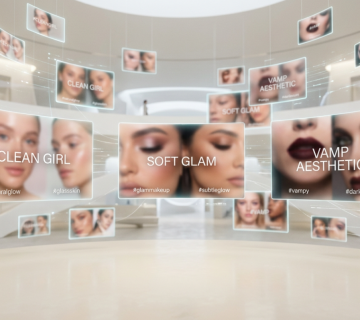
For most of the industry’s history, beauty editors and department store buyers curated what consumers saw. Today, discovery happens through TikTok and Instagram recommendation engines, which surface products based on watch behavior rather than editorial judgment — the product finds the consumer, not the other way around. Algorithmic feeds are built to reward fresh content and “just launched” framing over static catalogue items. A product that has been sitting on shelves for two years generates less organic reach than one with a countdown timer. Brands aren’t necessarily launching more because consumers need more — they’re launching more because the discovery system is hungry for newness and punishes anything that looks stale.
Reason 2: Paid acquisition costs are rising, and “new” is cheaper to advertise
Data from Q1 2026 retail media reports shows beauty brand ad spend on Amazon rose 7.8% year-over-year, pushing cost-per-click up 4.5% in the same period, while conversion rates stayed essentially flat. When it costs more to compete for the same customer, launching something genuinely new becomes one of the few remaining levers that reliably generates organic buzz, press coverage, and influencer seeding — the kind of attention brands can no longer count on buying at a sustainable price.
Reason 3: Category crowding forces differentiation through volume
As new SKUs pile into skincare, haircare, and color cosmetics, the competitive response isn’t necessarily better products — it’s more products, chasing every micro-trend (a new peptide, a new acid, a new “skinified” hybrid) before a competitor claims the positioning first. This is a defensive strategy as much as an offensive one: launch fast, occupy shelf and search real estate, sort out long-term performance later.
The counter-signal worth watching
Not everyone in the industry thinks this is sustainable. Manufacturing analysts entering 2026 have explicitly predicted fewer SKUs, shorter production runs, and a shift toward formulas that perform rather than formulas that simply generate a launch moment — citing fatigue with viral-ingredient chasing and vague positioning that doesn’t scale. Whether that prediction holds is an open question; the same industry has predicted a “slowdown” before and kept accelerating.
What this means for you as a consumer
Product overload is not evidence of a market solving your skin’s problems faster. It’s evidence of a market solving its own visibility problem. The practical takeaway: a product’s newness tells you nothing about its efficacy. Formulation, active concentration, and clinical evidence do. Treat every “new launch” claim with the same skepticism you’d apply to any other marketing message — because structurally, that’s exactly what it is.
Sources:
Pacvue Q1 2026 Beauty Industry Trends Report; Spate 2026 Beauty & Wellness Industry Analysis; Beauty Independent, “The Big Business Developments Driving Beauty Manufacturing in 2026”; industry SKU-volume estimates (2020 US launch data).



No comment