

The news
New data from Euromonitor International, shared during its “Live: First Look” briefing, puts hard numbers on something the industry has been describing anecdotally for a year: AI is now an active layer in how people find and choose skincare.
The key figures:
- Online skincare sales reached 37% of global sales in 2026, projected to hit 40% by 2030 — the highest e-commerce penetration of any beauty category.
- 28% of shoppers already use generative AI for product recommendations (Euromonitor’s Voice of the Consumer survey, fielded March 2025).
- AI-driven referral traffic to retail websites surged 304% between January and December 2025 — nearly eight times the 40% growth rate seen from other referral sources combined.
- In the US, fragrance purchases made digitally are already at 52%, projected to reach 63% by 2030 — notable because fragrance has historically been considered the category least suited to online selling, given its reliance on smell.
Irina Barbalova, Euromonitor’s global lead for beauty and wellness, framed the shift directly: brands with clear problem-solution positioning and credible evidence are the ones AI systems recognize and recommend, because digital visibility is now what determines discovery.
The analysis: why skincare specifically, and not makeup
This isn’t a random category leading the shift — and the reason matters for how you think about content and product marketing.
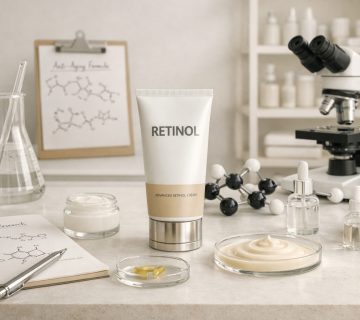
Skincare sells through a different psychological mechanism than color cosmetics. A shopper choosing a foundation shade is making a subjective, sensory decision an AI system struggles to parse well (“does this look good on me” isn’t a query with a clean data answer). A shopper choosing a retinol serum is usually asking a structured, evidence-based question: “what actually reduces hyperpigmentation,” “what’s safe with my rosacea,” “what concentration actually works.” That’s a query shape generative AI is built to answer — it rewards content with clear claims, cited evidence, and problem-solution framing, and penalizes vague sensory language.
This is the throughline connecting this week’s data to what we’ve already established here: algorithms replaced editors in discovery (the TikTok/Instagram feed dynamic); now generative AI is starting to replace search in decision-making, specifically for evidence-driven categories like skincare. The 304% surge in AI referral traffic in a single year isn’t a rounding error — it’s a category shift happening faster than most brands’ content strategies are adapting to.
What this means practically
For a skincare or beauty brand — or an independent voice covering this space — the implication is concrete: content built on vague claims (“glowing skin,” “radiant,” “luxurious”) is becoming invisible to the layer of discovery that’s growing fastest. Content built on specific, sourced, verifiable claims (ingredient concentrations, clinical citations, named mechanisms of action) is what generative systems can actually parse, trust, and surface. The brands and publishers that keep writing marketing copy for humans only, without structuring their claims for AI legibility, are optimizing for a shrinking share of how people actually arrive at a purchase decision.
The honest caveat: this is one data provider’s numbers from one survey wave, and “AI referral growth” figures in this early stage of the technology are volatile and easy to overstate — a 304% jump off a small 2024 base looks dramatic partly because the starting point was small. The direction of the trend is credible and consistent across multiple independent sources; the exact magnitude should be treated with some skepticism until more data providers confirm similar numbers.
Sources: Euromonitor International, “Online Sales to Reach Over 30% of Skin Care Purchases in 2026 as Digital Beauty Accelerates” (May 2026); Euromonitor Voice of the Consumer: Digital Shopper Survey (fielded March 2025).


No comment