
News Summary
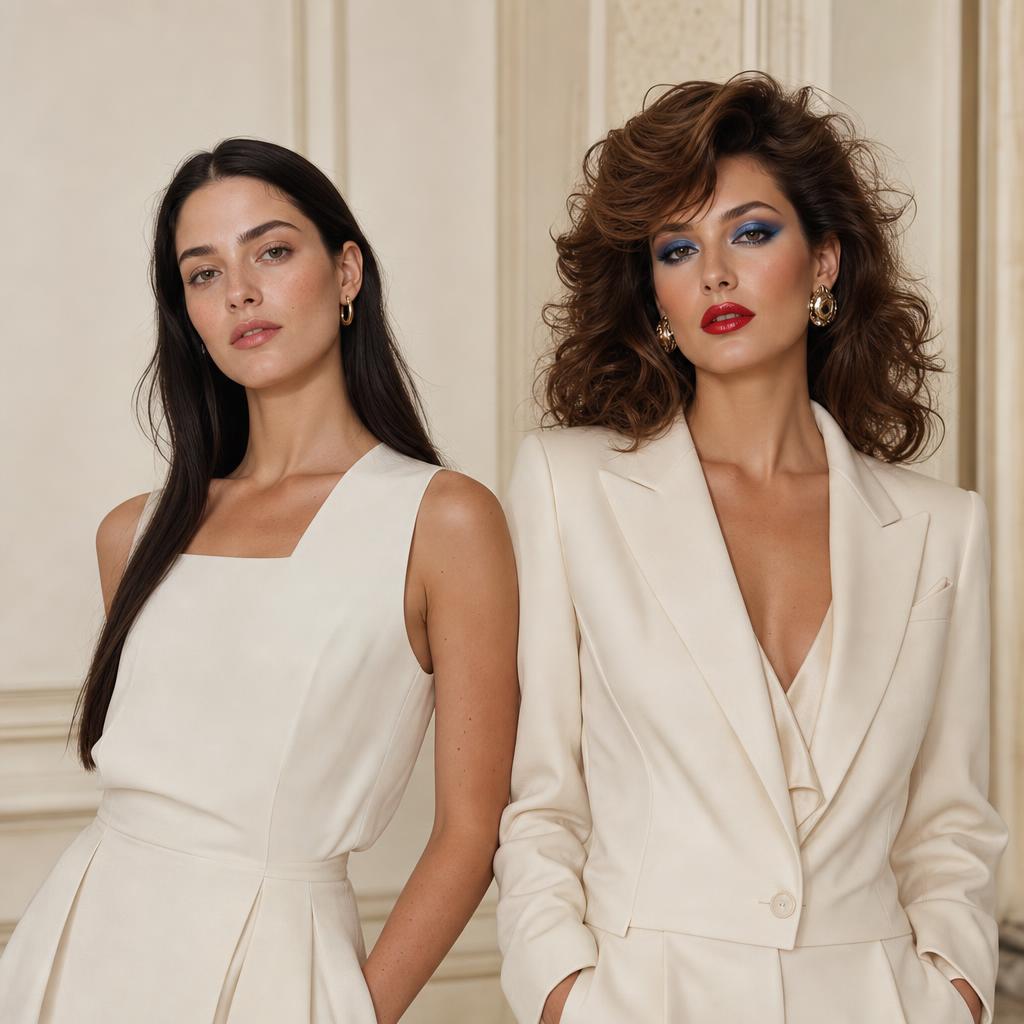
New York Fashion Week Spring/Summer 2027 is bringing a more expressive beauty mood to the runway, with several shows highlighting retro-inspired hair, bold color, glossy finishes, and more dramatic beauty details.
Among the most visible looks were voluminous, 1970s- and 1980s-inspired hair, glossy red lips, peacock-blue eye makeup, and shimmering amber-toned nails. At Diane von Furstenberg, the beauty direction combined Studio 54-inspired glamour with fresh, luminous skin, creating a modern interpretation of retro beauty rather than a direct recreation of the past.
Hair also played a major role. At Christian Siriano, hairstylist Lacy Redway created an updated version of crimped hair called the “enchanted crimp.” Instead of recreating the heavy, highly textured crimped hair associated with the 1980s, the look uses sleek hair with selective ridged sections, making the retro reference more restrained and contemporary.
At the same time, not every beauty direction at NYFW is maximalist. Some of the season’s looks continue to emphasize polished, natural-looking skin and softer, undone styling. This suggests that the current beauty landscape may be less about replacing one aesthetic with another and more about allowing contrasting styles to exist at the same time.
NBMakeup Analysis
The runway is not the real world
The return of retro glamour is visually striking, but a runway trend should not automatically be interpreted as a change in everyday beauty preferences.
Fashion shows are designed to create an image. They are spaces where designers, makeup artists, and hairstylists can exaggerate color, shape, texture, and proportion to communicate a particular mood. A blue eye, glossy red lip, or highly sculpted hairstyle can make a strong statement on a runway without becoming someone’s everyday makeup routine.
This distinction matters because beauty trends can become highly visible without becoming universally adopted.
Recent consumer data supports a more complicated picture.
McKinsey reports that color cosmetics are regaining momentum after years of minimalist makeup trends, with renewed interest in bolder looks and hybrid makeup-skincare products. However, the same report notes that consumers continue to place strong importance on skincare and broader wellness.
Circana’s U.S. beauty data also shows that makeup is growing, but more moderately than categories such as skincare and fragrance. In the first half of 2026, prestige makeup sales increased 3%, while growth within makeup was concentrated in products such as blush, bronzer, and lip liner. Circana described this as continued interest in affordable experimentation and category innovation.
That distinction is important.
Consumers may be interested in experimenting with makeup without wanting to completely change their everyday appearance.
Minimalism may be evolving, not disappearing
There is also evidence that minimalist beauty remains relevant.
CivicScience found that among U.S. makeup users, 49% preferred a minimal, light-makeup look, while trendy or experimental and bold styles represented 15% overall. The same research found that daily makeup use has declined compared with 2019, while weekly and monthly use has increased, suggesting that some consumers are becoming more selective about when they wear makeup.
This does not prove that minimalism will remain dominant forever. It does, however, challenge the idea that the rise of expressive runway beauty means consumers are abandoning simpler looks.
The current situation may be better described as beauty diversification.
A consumer can prefer natural-looking makeup for work or everyday life and still choose a red lip for a party. Someone may wear minimal makeup most of the time but experiment with blue eyeshadow for a special event. Another person may enjoy maximalist beauty every day.
These choices do not contradict one another.
Trends can influence personal style without replacing it
This may be the most important distinction.
A trend can influence what people see, what products brands launch, what creators discuss, and what consumers experiment with. But influence is not the same as replacement.
Runway beauty can introduce an idea. Social media can amplify it. Celebrities can make it desirable. Brands can make it accessible.
But whether that idea becomes part of everyday life depends on much more than visibility.
Convenience, time, comfort, workplace expectations, personal identity, occasion, skill level, and individual taste all influence how people actually wear makeup.
That is why a dramatic runway look can coexist with a strong preference for simple, natural-looking beauty.
The return of retro glamour, therefore, may not signal the end of minimalism at all.
It may signal something more interesting: the end of the idea that one beauty aesthetic needs to dominate everything.
Minimal makeup can remain relevant while bold makeup becomes more culturally visible. Retro glamour can return without replacing natural beauty. And consumers can move between these aesthetics depending on the occasion.
The bigger shift
The most interesting development at NYFW SS27 may not be that “retro beauty is back.”
It may be that beauty is becoming less prescriptive.
Instead of one dominant ideal telling consumers what beauty should look like, the current landscape allows several opposing aesthetics to exist simultaneously: natural and dramatic, polished and undone, minimalist and maximalist, modern and nostalgic.
The runway can push beauty toward experimentation without necessarily changing what people want every morning when they stand in front of their bathroom mirror.
Retro glamour may be having its moment. Minimalism may be having its own. And neither necessarily has to win.
Source :


No comment