
Not a single “next big ingredient.” A structural shift in what beauty is for. Here’s what the data — not the trend-prediction hype cycle — actually points to.
From “what’s in it” to “what it does for your health”
The first wave of skinification was about ingredients: moisturizing foundations, antioxidant cleansers, SPF-infused primers. Industry analysts now describe a second wave forming — a shift from obsessing over inputs (INCI lists, buzzword actives) toward outcomes: measurable skin health, resilience, and what analysts are calling “healthspan” — years lived with visibly and biologically healthy skin, not just years of using products. This mirrors language borrowed directly from the longevity-medicine field, and it’s not incidental: the broader longevity and anti-senescence industry is projected to grow from roughly $800 billion toward $1.87 trillion by 2034, and beauty is positioning itself inside that growth story rather than beside it.
Personalization is becoming infrastructure, not a marketing word
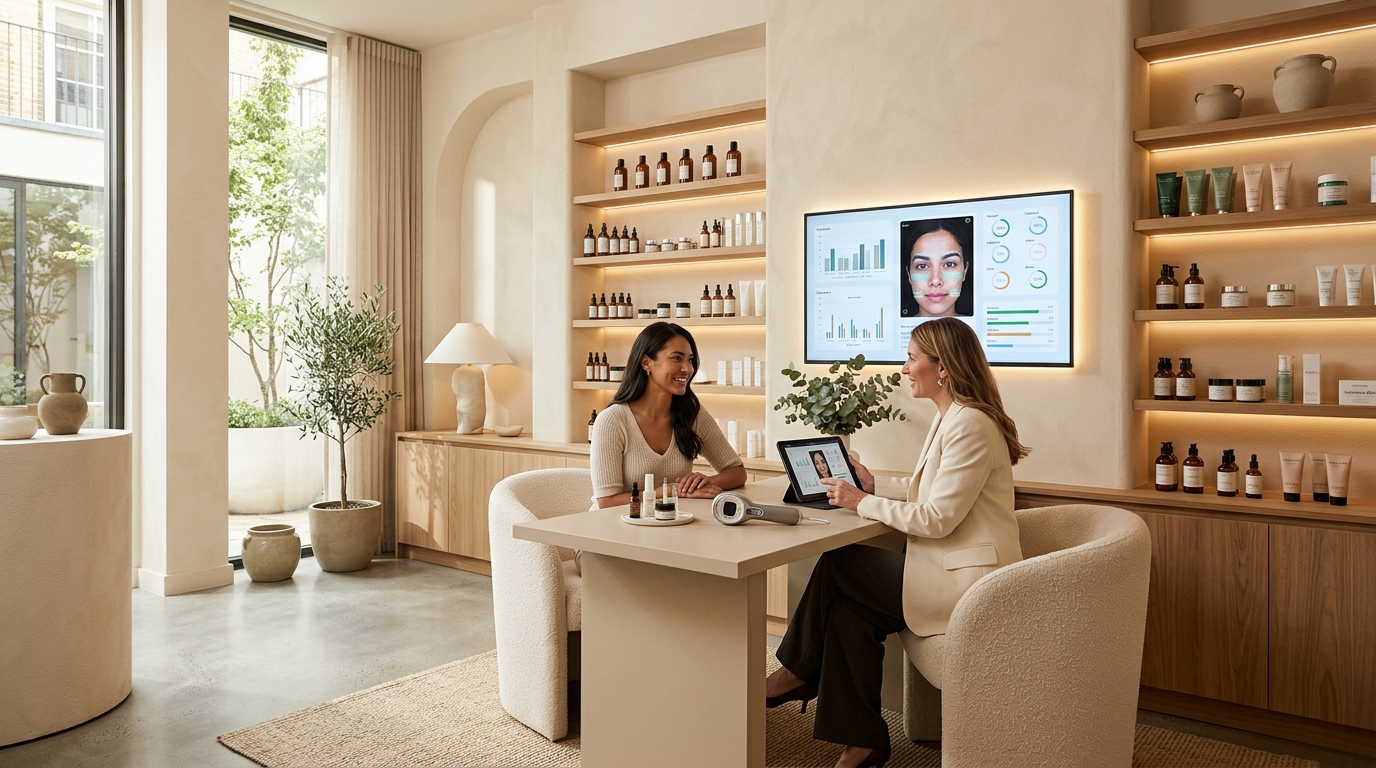
AI-driven diagnostics, at-home skin analysis, and algorithmic color-matching are moving from novelty features to expected infrastructure — with manufacturers now being asked to support smaller batch sizes and rapid SKU variation instead of mass-identical production runs. The practical effect: fewer “one formula for everyone” launches, more routines built around individual data.
The “masstige” squeeze
One of the more concrete, less hyped data points: masstige skincare — brands positioned between mass and prestige — outpaced both categories, with sales climbing roughly 14% through late 2025, as price-sensitive but quality-conscious consumers traded down from luxury and traded up from pure drugstore. This is the trend line worth watching over any single viral ingredient: consumers increasingly refuse to pay prestige prices without prestige-level clinical proof, and refuse to accept mass-market formulas without at least some active-ingredient credibility.
“Clean beauty” is being replaced by “prove it”
Analysts tracking 2026 skincare language note that vague clean-beauty claims are losing credibility with a consumer base that has become too informed to accept marketing language without substantiation. The replacement isn’t a new buzzword — it’s a demand for clinical evidence, traceable sourcing, and realistic (not miracle) timelines. Brands that keep leaning on “clean” without data are described as losing ground specifically because consumers have learned to ask for the receipts.
Where the actual innovation is concentrated
Two areas show the clearest R&D investment right now: biotech and fermentation-derived actives (replacing animal-derived or environmentally fragile raw materials) and K-beauty-originated regenerative ingredients like PDRN, which are moving from prestige Korean dermatology into mainstream Western formulations.
The honest caveat
Trend forecasting reports are produced by firms with a commercial interest in brands buying their forecasts — WGSN, Spate, and similar outfits are not neutral observers. Treat “2027 predictions” the same way you’d treat a weather forecast three seasons out: directionally useful, not something to bet your content calendar on entirely. The one pattern that shows up consistently across multiple independent sources, though, is the shift from ingredient-chasing toward outcome-and-evidence demand — that’s the safer bet.
Sources:
BeautyMatter / Euromonitor, “Skinification’s Next Frontier: Expanding Healthspan”; Forbes, “Longevity Beauty in 2026”; Beauty Independent, “Top Skincare Trends for 2026”; Cosmetica Labs / WGSN 2027 Beauty Trend Predictions; Accio Business, “Skinification Trend 2026.”

No comment