
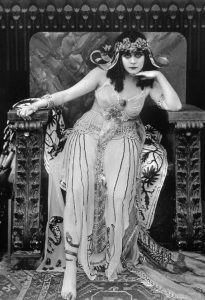
Long before modern eyeliners, beauty trends, and cosmetic brands, ancient Egyptians developed one of the most recognizable eye makeup traditions in history: kohl.
Today, kohl is often associated with Cleopatra. However, this connection tells only a small part of the story.
The use of eye cosmetics in ancient Egypt began thousands of years before Cleopatra’s reign. More than a beauty product, kohl represented a connection between appearance, culture, identity, and ancient knowledge of materials.
The history of kohl shows us that makeup has never been only about decoration. Throughout human history, beauty practices have also reflected beliefs, traditions, and the way people understood themselves and their world.
- The Origins of Egyptian Kohl
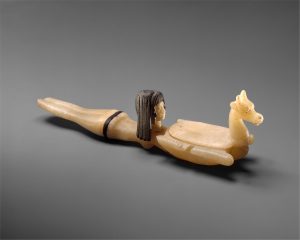
The history of Egyptian eye makeup goes back thousands of years.
Archaeological evidence shows that ancient Egyptians used mineral-based eye cosmetics from early periods of Egyptian civilization. Kohl became one of the most recognizable elements of ancient Egyptian appearance, creating the iconic dark eye shape that is still remembered today.
The traditional look usually included a dark line around the eyes, sometimes extending outward. Green pigments were also used around the eyes, creating another important part of ancient Egyptian beauty aesthetics.
One of the minerals used for green pigments was malachite, a naturally occurring copper carbonate mineral known for its intense green color.
However, kohl was not simply a cosmetic trend. It became part of daily life and cultural expression.
- The Materials Behind Ancient Kohl
Ancient kohl was not a single formula. Different recipes existed depending on location, period, and available materials.
Two important minerals connected to ancient Egyptian eye cosmetics were:
Galena
Galena is a mineral composed mainly of lead sulfide.
Ancient Egyptians used galena-based materials to create dark pigments for eye cosmetics. Scientific studies of ancient kohl samples have confirmed the presence of lead-containing compounds in some historical formulas.
Malachite
Malachite was used to create green pigments.
Its bright green color made it valuable in ancient Egyptian cosmetics, especially for creating green eye makeup.
Modern scientific research has helped historians and scientists understand these materials more clearly. Studies using advanced analytical methods have examined ancient kohl samples to identify their chemical composition and manufacturing techniques.
- More Than Makeup: The Cultural Meaning of Kohl
For ancient Egyptians, makeup was not only about enhancing appearance.
Kohl was connected to cultural identity, social practices, and personal expression.
Both men and women used eye cosmetics, showing that makeup was not limited to one gender. It was part of how people presented themselves within society.
Beauty in ancient Egypt was connected to ideas of appearance, health, spirituality, and social identity.
This reminds us that makeup has always carried meanings beyond the surface.
- The Science Behind Ancient Kohl
One of the most interesting questions about ancient kohl is why people used it.
Historical sources suggest several possible reasons.
The dark pigments created a strong visual effect around the eyes, which was especially significant in the bright environment of ancient Egypt.
Scientific research has also explored whether some compounds in ancient kohl could have had protective effects for the eyes.
Some studies suggest that certain lead-based compounds may have influenced immune responses around the eyes. However, researchers continue to study these effects, and the exact reasons ancient Egyptians used kohl were likely a combination of cosmetic, cultural, and practical factors.
Ancient cosmetics were created with the knowledge and materials available at that time, which makes their development an important part of the history of science and beauty.
- Cleopatra: The Woman Behind the Myth
When people think about Egyptian beauty, Cleopatra is usually the first name that comes to mind.
Over centuries, she became one of the most famous beauty symbols in history.
However, the historical Cleopatra is more complex than the popular image.
Ancient coins and historical representations show different versions of her appearance. They do not always match the modern image of Cleopatra as an idealized beauty figure.
Her reputation was also influenced by political conflicts. After her defeat, Roman propaganda shaped parts of the story surrounding her, presenting her through the perspective of her enemies.
The Cleopatra we know today is a combination of history, politics, art, and storytelling.
- Why Kohl Still Matters Today
Thousands of years after ancient Egypt, eye makeup remains one of the most powerful forms of beauty expression.
From traditional kohl to modern eyeliners, the idea of defining the eyes continues across cultures and generations.
The materials have changed, the formulas have evolved, and beauty standards have transformed — but the desire to use makeup as a form of identity and expression remains.
The history of kohl reminds us that beauty is not only about trends.
It is also about human creativity, culture, and the stories we tell through appearance.
- NBMakeupHouse Perspective
Ancient Egyptian kohl represents something bigger than an early cosmetic product.
It shows that beauty has always existed at the intersection of art, science, and society.
Today, makeup is often discussed through the lens of trends and products. However, looking back at ancient beauty traditions reveals a deeper truth:
Beauty is not created only by products. It is created by meaning.
From ancient mineral pigments to modern cosmetic innovations, makeup continues to reflect how humans understand identity, culture, and self-expression.
- Sources
Scientific & Academic Sources
Scientific Reports — Nature
Analysis of ancient Egyptian kohl samples and their chemical composition.
ScienceDirect
Research chapter discussing the materials and compounds used in historical cosmetics.
Museum & Historical Sources
Pitt Rivers Museum, University of Oxford
Information about ancient Egyptian cosmetics and body decoration practices.
Egypt Museum
Historical overview of kohl and Egyptian beauty traditions.
Cleopatra References
History Facts
Discussion of common myths surrounding Cleopatra’s image and historical representation.
No comment